Away for the holidays: a tenant's checklist for leaving a rented flat empty in winter
Going home for the holidays? A burst pipe in an empty flat is one of winter's most expensive surprises. Here is what to check, switch and tell your landlord before you lock the door.

It's the end of October, and many tenants are already booking trains and flights home for Christmas and New Year. Before you go, spend half an hour on the flat you're leaving behind. A pipe that freezes and bursts in an empty flat can run for days before anyone notices, and the damage reaches the floors, walls and often the neighbours below.
The good news: most of the protection comes from a few simple steps that cost little or nothing. Here is a checklist that works wherever you rent in Europe.
1. Read your lease first
Before you change anything, take five minutes with your rental agreement. Look for three things:
- A minimum heating requirement. Some leases say the flat must be kept at a certain temperature over winter, or that the heating must never be switched off completely.
- A duty to report long absences. Many leases ask you to tell the landlord if you'll be away for more than a set number of days, so someone can react if something goes wrong.
- Access arrangements. Check what the lease says about the landlord entering the flat in an emergency, and whether you're expected to leave a key with someone.
If the lease says nothing on these points, that doesn't mean nothing applies. Tenancy law in most countries expects tenants to take reasonable care of the property and to report damage promptly. The details differ from country to country, so if you're unsure, ask your landlord.
2. Keep the heating on, low
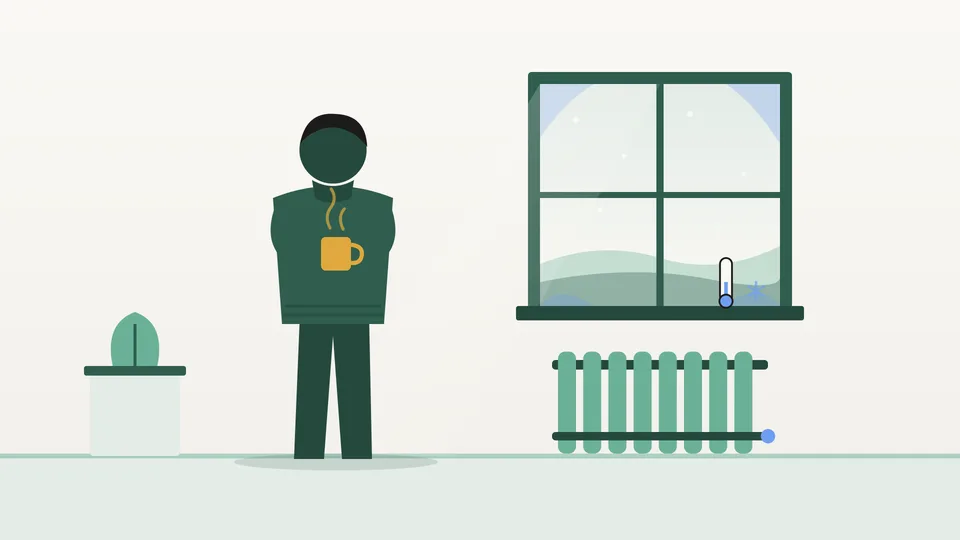
The single most important step is not to switch the heating off. Turn it down instead. Many thermostats and boilers have a frost-protection or "holiday" setting designed exactly for this.
How low is low enough? Advice varies. British Gas recommends keeping the thermostat at at least 7 °C even when you're not at home, while the American Red Cross suggests no lower than about 13 °C (55 °F) when you're away in cold weather. If your flat has poorly insulated outside walls, pipes along an exterior wall, or sits above an unheated space, err on the warmer side. If your lease names a minimum, follow that.
A few practical points:
- If you have a timer, make sure it doesn't switch the heating off overnight while you're away.
- If you pay for heating through the building (central heating), check whether you control the radiators at all, and don't turn the thermostatic valves to zero. The snowflake or "*" setting is usually the frost-protection position.
- If you heat with electric heaters, don't leave portable heaters running unattended. Ask the landlord what they'd prefer.
3. Find the stopcock and use it for longer trips
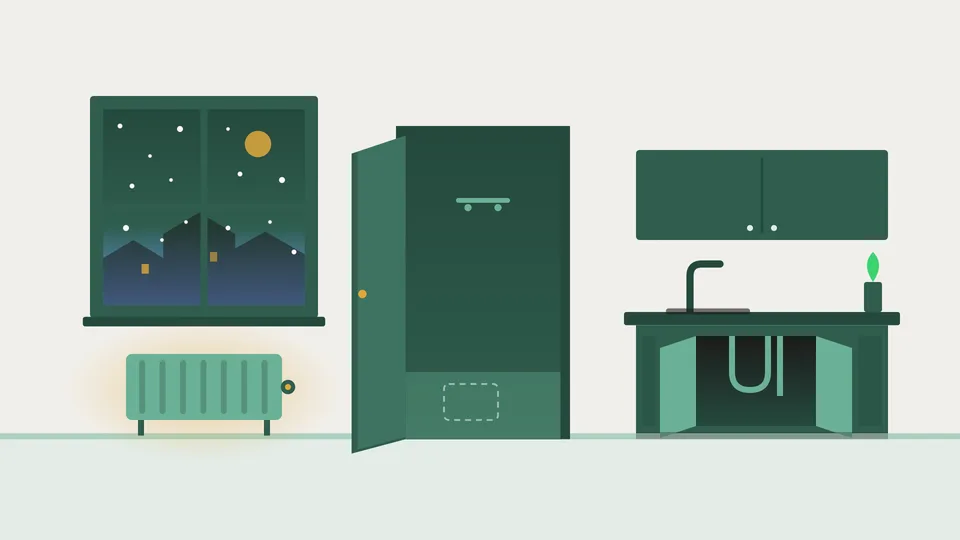
The stopcock (main water shut-off valve) is the tap that cuts the water to the whole flat. In flats it's often under the kitchen sink, in the bathroom, near the water meter, or in a utility cupboard. Some flats share a valve in the stairwell or in a meter pit outside.
Find it now, while nothing is wrong, and check that it actually turns. A valve that hasn't been touched in years can be stiff. If it won't move, tell your landlord rather than forcing it.
For longer absences, insurers recommend turning the water off at the stopcock. The UK insurers' association ABI suggests this when you're going on holiday or leaving the home empty. Once the water is off, you can open the taps to let the remaining water out, then close them again.
One caution: in some systems the heating is linked to the water supply, for example a combi boiler that needs mains pressure. Before you turn the water off, ask your landlord whether it's safe to do so in your flat.
4. Ask about dripping taps
You'll find conflicting advice on this. Some, mostly American, sources suggest leaving a tap dripping so water keeps moving through the pipes. UK advice tends to say the opposite, and the ABI tells people to fix dripping taps. Which is right depends on how the building is plumbed, how cold it gets and how water is billed. Don't guess; ask your landlord what they want.
5. Let warm air reach the pipes
Pipes freeze where warm air can't reach them: inside kitchen units, under the bathroom sink, behind a closed door to a cold room.
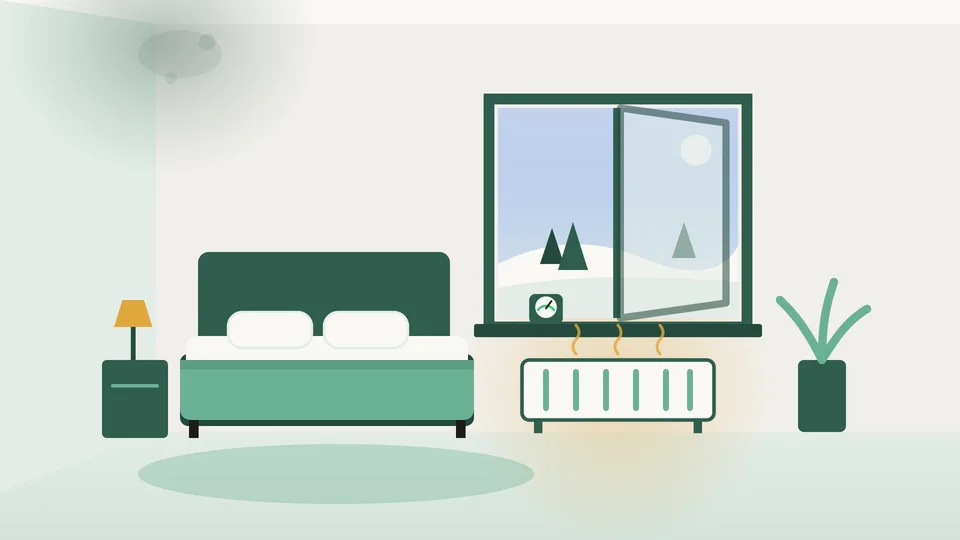
- Leave internal doors open so heat spreads evenly through the flat.
- Open the cabinet doors under sinks and in front of any pipes or a water heater.
- If there's a loft hatch you're allowed to use, British Gas suggests opening it in icy weather so warmer air rises to pipes and tanks up there.
- Close windows properly, and check that no window is left tilted open.
6. Leave a key and an emergency contact, and tell the landlord
If a pipe bursts while you're away, the most valuable thing is someone who can get in quickly. Arrange:
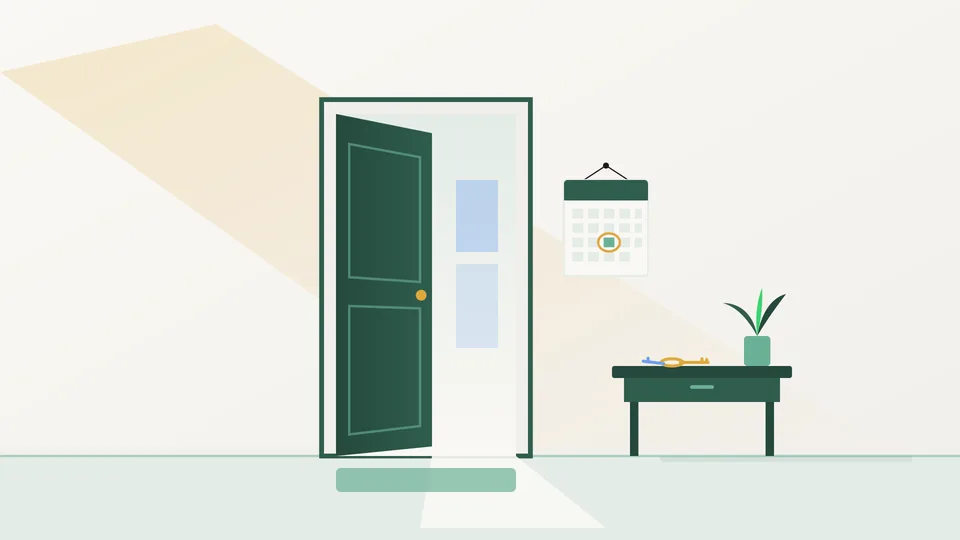
- A key holder nearby: a friend, a neighbour or the landlord, if the lease allows it.
- An emergency contact with a phone number, plus a way to reach you while you're travelling.
- A message to your landlord saying when you leave, when you'll be back, how the heating is set, whether the water is off and who has a key.
It's best to send this in writing so there's no doubt later about what was agreed. If your landlord uses LeasingTrack, a message sent there leaves a dated record of your absence and your emergency contact, kept together with your lease.
7. Read your contents insurance
If you have contents (renters') insurance, check what happens when the home is empty. Many policies restrict cover after the home has been unoccupied for a set period. The UK's Financial Ombudsman Service notes that this is usually 30 or 60 days, after which cover for events such as theft or escape of water may no longer apply. Some policies also require the heating to be kept on or the water turned off.
The terms differ between insurers and countries, so read your own policy, look for the words "unoccupied" or "vacant", and if your trip is long, tell your insurer in advance.
8. When you come back
Walk through the flat before unpacking. Look for damp patches on ceilings and walls, water on the floor and taps that won't run.
If a pipe seems frozen:
- Use gentle heat only. Warm the room, or use a hairdryer or warm (not boiling) towels on the pipe. Never use an open flame, a blowtorch or boiling water: sudden heat can crack the pipe.
- Open the tap the pipe feeds so melting water has somewhere to go.
- Watch for leaks while it thaws. Ice can seal a split pipe, and the leak only starts when it melts.
- Report it to your landlord at once, even if it seems to thaw without trouble. A small crack may not show for a while.
If a pipe has burst, turn off the water at the stopcock immediately, switch off the heating and water heater, take photos and contact your landlord. If water is coming through to the flat below, warn your neighbours too.
Who pays for a burst pipe?
There's no single answer. It depends on your country's tenancy law, your lease, and how the damage happened. In general, repairs to the building's pipes are often the landlord's responsibility, but a tenant who ignored lease terms, such as switching the heating off completely or not reporting a long absence, may be asked to cover part of the cost. Insurance (the landlord's building cover and your contents cover) can change the picture again.
Check your lease, and if a serious bill lands on you, get advice from a tenants' association or a lawyer in your country before you agree to pay.
The short version
- Read the lease: heating minimum, absence reporting, access.
- Heating on, at a low or frost setting.
- Find the stopcock; for longer trips, turn the water off (ask first).
- Ask the landlord about dripping taps.
- Open internal and cabinet doors.
- Leave a key and an emergency contact; tell the landlord in writing.
- Check your insurance for unoccupancy limits.
- On return: gentle heat only, and report problems at once.
Have a good trip, and come back to a dry flat.
Sources
- British Gas – How to prevent frozen pipes this winter
(opens in a new tab) - ABI – How to avoid frozen and burst pipe misery
(opens in a new tab) - American Red Cross – Preventing & Thawing Frozen Pipes
(opens in a new tab) - Financial Ombudsman Service – Escape of water claims in unoccupied properties
(opens in a new tab)