Heating broken or the flat too cold? A tenant's winter plan
When the radiators stay cold in November, what you do in the first few days matters. Here's who has to fix what, how warm is warm enough, and how to push for a quick repair without putting your tenancy at risk.

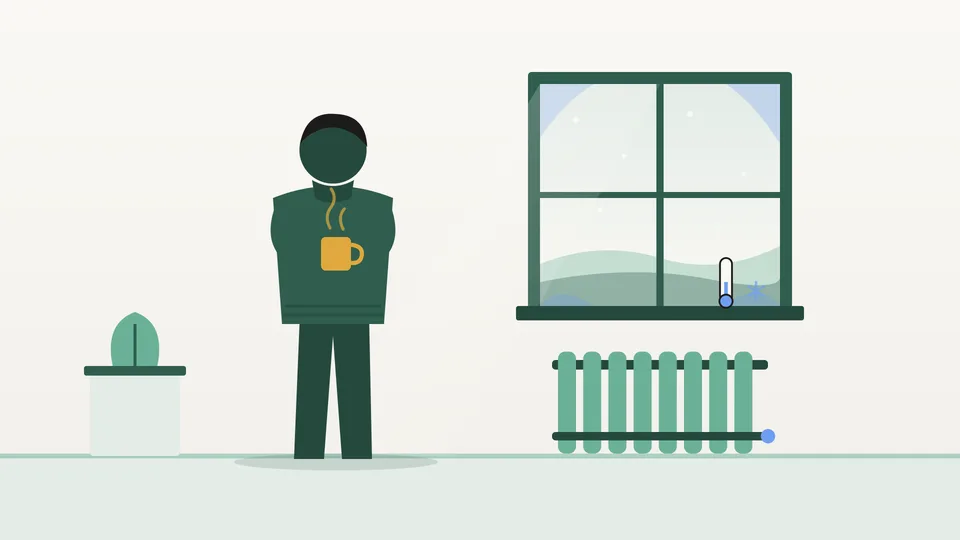
It's late October, and in much of Europe the heating has been on for a few weeks. This is when boilers that sat idle all summer start to fail and radiators turn out to be lukewarm at best. If it's happened to you, here's a calm plan: who has to fix what, what counts as "warm enough", and what to do from day one.
The details differ from country to country. The general rule is very similar everywhere, though, and it's the best place to start.
Who is responsible for what
Across most of Europe the split looks like this:
- The landlord keeps the heating system working. Boilers, radiators, pipes, central plant: if it breaks through normal wear or age, repairing it is the landlord's job.
- The tenant uses it properly. That means bleeding radiators if you've been shown how, not blocking vents, keeping the flat from getting so cold that pipes freeze or mould grows, and letting the landlord or engineer in when you've agreed a time.
- Whoever causes damage pays for it. If a radiator valve snaps because a sofa was shoved against it, that's on the tenant. If the boiler is fifteen years old and finally gives up, that's on the landlord.
A few country examples:
- England: landlords must keep heating and hot water installations in repair under section 11 of the Landlord and Tenant Act 1985, and a clause in the tenancy agreement can't shift that onto you. Gas appliances have to be checked every 12 months by a Gas Safe registered engineer, according to Shelter's legal guidance. Losing heating in cold weather should be treated as an urgent repair.
- Hungary: the housing lease act (1993. évi LXXVIII. törvény) makes the landlord responsible for keeping the building's central systems working, including central heating with the pipes and radiators inside the flat. For appliances that belong to the flat itself, like a gas boiler or an electric water heater, the lease can split the costs. If it doesn't, the default is that the tenant pays for maintenance and the landlord pays for replacement. In practice, many Hungarian leases have the tenant pay for the annual boiler service and the landlord pay for parts and real repairs. Check what your contract says.
How warm is warm enough
There's no single European number, and often no legal number at all.
- Germany: there's no temperature written into the law. The German Tenants' Association (Deutscher Mieterbund) says the heating should let you reach at least 20–22°C between 6 a.m. and midnight, with around 18°C acceptable at night. Courts largely follow figures like these, and a lease clause setting a lower temperature isn't valid, according to the association.
- United Kingdom: there's no single legal minimum for rented homes. Health guidance uses 18°C, a threshold that comes from a Public Health England review and matters most for people over 65 or with health conditions. Local councils can treat "excess cold" as a hazard.
- Hungary: the law sets no indoor temperature. What it does is make the owner responsible for the heating system, so a flat that can't be heated properly is a defect the landlord has to deal with.
If your country isn't listed, a tenants' association or the local housing authority can usually tell you what's expected locally. Around 18–20°C in the rooms you use during the day is a reasonable starting point almost anywhere.
What to do, step by step
1. Rule out the simple things
Before you report anything, take five minutes. Has the boiler pressure dropped? Is there a fault code on the display? Has the thermostat battery run out? Are the radiator valves open? Is the gas or electricity meter topped up? If one of these fixes it, great. If not, you've got useful details for your report.
2. Report it at once, and in writing
Call if it's urgent, but always follow up in writing: an email or a message the landlord can't later say they never got. Keep it short and factual:
"Since Tuesday 21 October the boiler shows error F28 and the radiators stay cold. The living room was 15°C this morning. Please arrange a repair as soon as possible. I'm at home after 4 p.m. on weekdays to let the engineer in."
The date, the symptom, a measured temperature, and when you can give access. That's all it needs.
3. Keep a record
From the first day, write down:
- the date and time you reported the problem, and every reply;
- room temperatures, measured twice a day with a cheap thermometer and photographed with the time visible;
- photos or short videos of fault codes, cold radiators or leaks;
- any visit from an engineer, and what they said.
If you use LeasingTrack, report the issue there: the report and the messages that follow stay on record with your lease, so nobody has to hunt for that old message thread later.
4. Ask for a quick repair, and agree on stopgaps
A complete heating failure in winter is urgent. A day or two is reasonable for a first visit; weeks are not. If parts take time, ask the landlord to lend or pay for an electric heater in the meantime, and agree in writing who pays the extra electricity.
5. Don't withhold rent on your own
This is the step that gets tenants into trouble. In England, Shelter advises clearly against withholding rent, because unpaid rent can lead to eviction even when the landlord is in the wrong. Some countries do allow a rent reduction for a defect, Germany among them, but how much is reasonable is often disputed. Hungarian law lets a tenant go to court or, after asking the landlord without success, have the work done at the landlord's expense, but that has conditions and risks of its own.
The safe route is to keep paying, put your request for a reduction or a refund of costs in writing, and get advice before you deduct anything.
When to go further
If you've reported in writing, followed up with a clear deadline, and nothing happens, it's time for outside help:
- A tenants' association. In Germany the local Mieterverein, elsewhere a national or city tenants' organisation. They know local norms and can often write to the landlord for you.
- The local authority. In England, your council's environmental health or private renting team can inspect the home and order repairs. Many other countries have a building or housing authority that deals with unsafe or unheatable homes.
- A lawyer or legal aid. If you're thinking of reducing the rent, doing the repair yourself and charging the landlord, or going to court, get individual advice first. The rules on notice and amounts vary a lot.
And if you ever smell gas, or the boiler shows signs of carbon monoxide trouble, forget the paperwork for now: leave, ventilate, and call the gas emergency number.
A short checklist
- Check the basics: pressure, thermostat, valves, meter.
- Report in writing on the same day.
- Measure and photograph temperatures daily.
- Agree a repair date and a temporary heater.
- Keep paying rent; ask for any reduction in writing.
- If nothing moves, contact a tenants' association, the local authority or a lawyer.
Most heating problems get fixed within days when the report is clear and the landlord can see exactly what's wrong. A tidy record helps you both, and it's the best protection you have if things drag on.
Sources
- Deutscher Mieterbund – Heizperiode gestartet
(opens in a new tab) - Public Health England – Minimum home temperature thresholds for health in winter
(opens in a new tab) - Shelter Legal – Heating, hot water and power problems
(opens in a new tab) - Shelter – Withholding rent for repairs
(opens in a new tab) - 1993. évi LXXVIII. törvény (lakástörvény) – Nemzeti Jogszabálytár
(opens in a new tab)