The handover report, room by room: a move-in and move-out checklist
When a deposit dispute starts, the signed handover report with its photos is usually the deciding evidence. Here is what to record at move-in and move-out, from meter serial numbers to the last key fob.

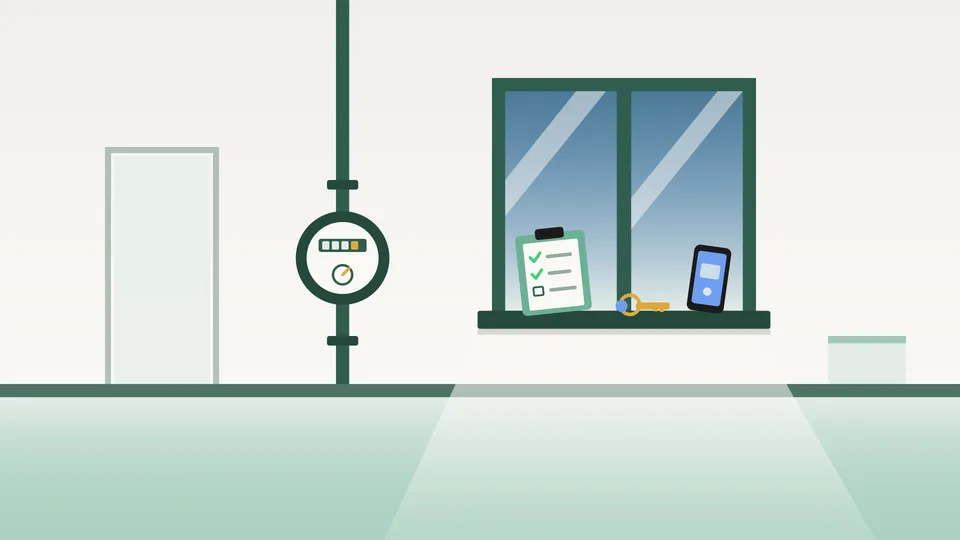
Most deposit disputes come down to one question: what did the flat look like on the day the tenant moved in? Our articles on deposits and on damp both depend on the answer. The document that gives that answer is the handover report. In Hungary it is called the átadás-átvételi jegyzőkönyv (or birtokbaadási jegyzőkönyv), in Germany the Übergabeprotokoll, in France the état des lieux, and in the UK the inventory and check-in report.
It costs an hour at the start of a tenancy. Without one, landlords and tenants often lose weeks arguing at the end. Autumn is a busy time for moves, and meters start turning faster once the heating comes on, so now is a good time to get the routine right.
Why it matters for both sides
The report protects the tenant from paying for damage that was already there. It protects the landlord by making it possible to prove that something was damaged during the tenancy. In most systems that burden falls on the landlord.
- In England, the deposit schemes say adjudicators decide only on the paperwork. The burden is on the landlord to justify a deduction, and mydeposits calls a check-in inventory signed by both parties, with date-stamped photos, the strongest foundation for a claim. The Tenancy Deposit Scheme says that without one, a claim is very difficult to win.
- In Germany a handover report is not legally required, and neither side can be forced to sign one. A report signed by both parties is strong evidence, though, and vague wording weakens it (mietrecht.org).
- In France it is a legal obligation. Landlord and tenant must draw up an état des lieux together at move-in and move-out, and it is attached to the lease. If they cannot agree, a commissaire de justice prepares it and the two sides split the cost (Service-Public).
- In Hungary private leases are fairly free-form, and the report works mainly as evidence. Many lease templates make it an inseparable part of the contract (RentTab).
The rules are different again in Czechia, Poland, Romania and elsewhere. The practical advice below applies everywhere, but if a dispute is heading towards court, check the local rules with a lawyer or a tenants' or landlords' association.
The checklist
1. The basics
- Names and contact details of the landlord and every adult tenant
- The property's full address, including the flat number
- The date of the lease and the date and time of the handover
- Who was present, if anyone other than the parties attended (an agent or a witness)
2. Meters
For each meter (electricity, gas, cold water, hot water, heat meters or heat-cost allocators on radiators), record:
- the serial number (the factory number on the meter, not the customer number on the bill)
- the reading, with every digit, including the decimals if the meter shows them
- a photo in which both the reading and the serial number can be read
The serial number matters more than people expect. In a block of flats, meters often sit side by side in a shared cupboard. A reading copied from the neighbour's meter has started more than one utility dispute. Recording the serial numbers also settles who pays from which reading. That is particularly useful at the start of the heating season, when the numbers climb quickly.
3. Room by room
Go through the rooms in a fixed order (hall, living room, bedrooms, kitchen, bathroom, toilet, balcony, storage or cellar). In each room, check:
- walls and ceiling: paint, cracks, stains, damp marks, holes from screws
- floor: scratches, dents, loose tiles, gaps in the laminate
- windows and doors: do they open, close and lock, are seals intact, any cracked glass
- fixtures: light switches, sockets, radiators and their valves, blinds, curtain rails
- in kitchens and bathrooms: taps, drains, silicone joints, tiles, extractor fan
When you describe damage, be precise. "Some wear on the floor" is no use as evidence. Write "30 cm scratch on the parquet, 50 cm from the balcony door" instead. If there is no damage, say so: "walls: freshly painted white, no marks" is also evidence.
4. Furniture and appliances
List every item that stays with the flat and note its condition: "sofa, grey fabric, small stain on left cushion", "washing machine, Bosch, works, door seal intact". For appliances, test them in front of each other and write down that they work. Manuals and warranty cards can be listed too.
5. Keys, fobs and remotes
Count everything: flat keys, building entrance keys, mailbox key, cellar key, garage remote, access fobs. Write down the number of each type. When the tenant moves out, a missing fob is easy to prove only if you counted at the start.
Photos and video
- Shoot in daylight where you can, and switch the lights on in dark rooms.
- Take a wide shot of each room first, then close-ups of every defect, with something next to it for scale (a coin or a tape measure).
- Make sure the photos carry a date and time. Keep the original files rather than screenshots or messenger copies, which can lose their metadata. mydeposits recommends a visible timestamp and sharing the photos with the other party.
- A slow video walkthrough, narrated out loud, is a good extra. It shows how the rooms fit together, which single photos cannot.
- Number the photos and refer to them in the report ("see photo 14").
Signing and keeping it
Print or prepare two identical copies. Both parties sign every page, or at least the last page, and each keeps one. If something is disputed during the walkthrough, write down both views rather than leaving it out.
If a tenant notices a problem only after a few days (a radiator that does not heat, a leaking drain), add it in writing and have it countersigned, or at least send it in a dated message. In France the law gives tenants ten days to ask for additions, and the first month of the heating season for heating problems. In England, the deposit schemes expect tenants to get seven to ten days to comment. Elsewhere there is often no fixed period, so agree on one in the lease.
If one party refuses to sign, note that on the report, date it, and keep the photos. The report still has value, but it will need more supporting evidence.
Then attach the report to the lease, and say in the lease that it is attached. If you use LeasingTrack, you can upload the signed report and the photos to the lease's documents. That keeps them with the contract, so you will not have to search through an old phone when the tenancy ends.
The move-out report
At the end of the tenancy, do the same walkthrough with the same structure, ideally on the original report, with a column for the condition at move-out. Record the final meter readings, count the keys back in and take a new set of photos from the same angles.
Then compare the two reports item by item. Normal wear from ordinary use (slightly faded paint, light marks where furniture stood) is generally not the tenant's cost. Damage beyond that may be. Where exactly that line falls depends on local law and on the lease, so check doubtful cases with a lawyer or accountant.
Remember that utility and service charge bills often arrive weeks after move-out. The final readings in the move-out report are what lets you settle those bills fairly later.
In short
A good handover report is specific, photographed, dated, signed twice and attached to the lease, and it has a matching report at move-out. It takes an afternoon to do well, and it can save you a dispute when the tenancy ends.
Sources
- mydeposits – Evidence for deposit disputes
(opens in a new tab) - Tenancy Deposit Scheme – Understanding property inventories, check-in and check-out
(opens in a new tab) - mietrecht.org – Mieter oder Vermieter unterschreibt Übergabeprotokoll nicht
(opens in a new tab) - Service-Public.fr – Inventory of premises for entry into a residential lease
(opens in a new tab) - RentTab – Átadás-átvételi jegyzőkönyv minta albérlethez
(opens in a new tab) - Bérletkezelő – Átadás-átvételi jegyzőkönyv lakáshoz: minta és kitöltési útmutató
(opens in a new tab)