Smoke and CO alarms in a rental: who fits them, who tests them, what the rules say
Boilers and stoves are back on, so now is a good time to check the alarms. Here's what smoke and CO alarms detect, where they go, who is responsible in several European countries, and a short checklist for landlords and tenants.

Late October is when the heating comes back on. Gas boilers fire up after the summer, wood stoves get lit again, and every winter this is when carbon monoxide poisoning cases go up. Earlier posts here covered heating faults, maintenance, insurance and handovers. This one is about the two small devices on the ceiling and the wall, and the question landlords and tenants keep asking: whose job are they?
The short answer is that it depends on the country, and in Germany on the state. Below you'll find the basics that apply everywhere, a few real examples of national rules, and a checklist you can use this week.
What each alarm actually detects
A smoke alarm reacts to smoke particles in the air. It gives early warning of a fire, which matters most at night when people are asleep. It does nothing about gas leaks or carbon monoxide.
A carbon monoxide (CO) alarm measures the CO gas in the air. Carbon monoxide comes from incomplete burning in gas boilers, water heaters, convector heaters, stoves, fireplaces and tiled stoves, especially when a flue is blocked or the room doesn't get enough air. You can't see it or smell it, and the early symptoms (headache, dizziness, tiredness) are easy to put down to a cold.
They are two separate devices with separate jobs. A combined smoke and CO alarm exists, but a smoke alarm on its own won't warn you about CO, and a CO alarm won't warn you about smoke.
The standards to look for
In the EU and the UK, check the box and the device itself for:
- EN 14604 for smoke alarms (shown in France as NF EN 14604, in the UK as BS EN 14604)
- EN 50291 for CO alarms (EN 50291-1 for domestic use)
You should also find a CE mark (UKCA or CE in Great Britain). Very cheap alarms with no standard printed on them aren't worth the money you save.
Both kinds of alarm wear out. Most smoke alarms are designed to last about ten years, and CO sensors have a limited life too. Many units have the replacement date or the manufacturing date printed on the back, and some beep to tell you they've reached the end. Treat that date as a deadline.
Where the alarms go
The exact rules differ, but this general practice holds almost everywhere:
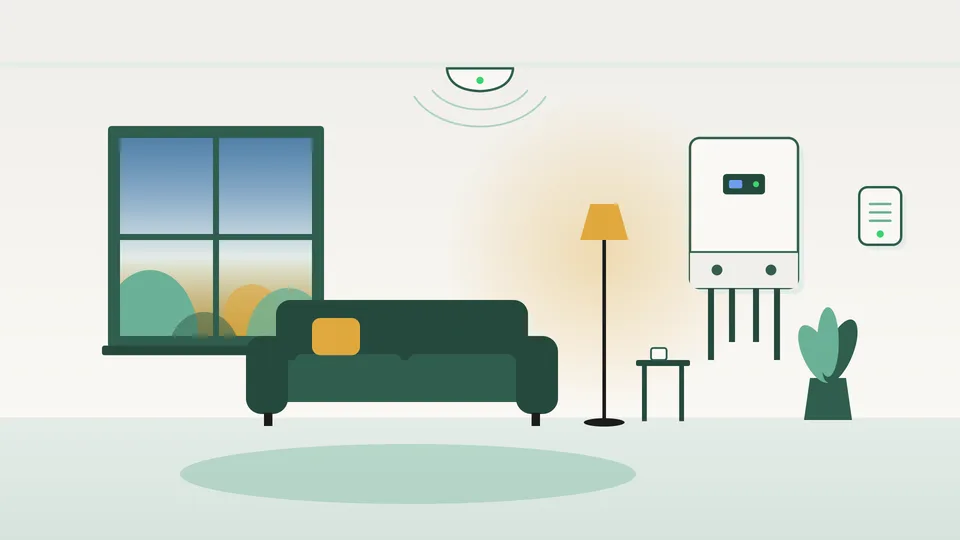
- Smoke alarms go on the ceiling, near the middle of the room, in bedrooms and in the hallway or landing you'd use to get out. Have at least one on every floor people live on.
- Keep smoke alarms out of kitchens and bathrooms, where steam and cooking set them off for no reason. A fitted kitchen alarm should be a heat alarm or a model made for kitchens.
- CO alarms go in the room with the fuel-burning appliance (boiler, gas heater, stove, fireplace). If someone sleeps near it, put one in that bedroom as well.
- For CO alarms, follow the manufacturer's placement instructions. A common guideline is 1–3 metres from the appliance, away from windows, vents and the steam from cookers.
Who is responsible: real examples
These examples show how much the rules vary. They're a summary, not legal advice, and laws change, so check the current version where your property is.
Hungary
Hungary has no general duty to fit a CO alarm in an existing flat let long-term. There are two important exceptions:
- New buildings with open-flue appliances. The 2012 Hungarian law on chimney-sweeping services, in force since October 2013, says a new building where an open-flue appliance runs (one that takes its combustion air from the room, such as many older gas water heaters and convector heaters) can only get its occupancy permit if a CO alarm is fitted (Weborvos, 2013; e-gépész).
- Short-term accommodation. Under the classification criteria for private accommodation, in force since 2023, if the place is heated by anything that burns fuel (gas boiler, convector heater, stove, fireplace, tiled stove), a smoke alarm and a CO alarm are required (Netkazán, April 2023). One industry source dates this to 2022, so check the current criteria if you run a short-term let.
Even where there's no legal duty, a CO alarm costs very little next to a gas appliance in a small flat.
Germany
All 16 states require smoke alarms in homes, at least in bedrooms, children's rooms and the hallways leading out of them. The landlord installs them, and the Federal Court of Justice has ruled that a tenant must accept this even after fitting alarms of their own (BGH, VIII ZR 290/14). Who keeps them working, though, depends on the state's building code. In Bavaria, Berlin and North Rhine-Westphalia, for example, the occupant does it unless the owner takes it on. In Rhineland-Palatinate, Saarland and Thuringia, the owner does. Published overviews disagree about several other states (ARAG overview), so read your state's current Landesbauordnung. Many landlords simply take on maintenance in the lease to avoid any doubt.
France
Smoke alarms (DAAF) have been required in every home since March 2015. According to Service-Public, the owner installs an alarm marked NF EN 14604 and checks that it works at the handover (état des lieux). In an unfurnished let, the tenant maintains it and replaces the battery or the unit when needed. In furnished and seasonal lets, the owner is responsible for everything, including batteries. Older articles that put everything on the tenant are out of date.
England
Under the Smoke and Carbon Monoxide Alarm Regulations, amended from 1 October 2022, landlords must fit a smoke alarm on every storey used as living accommodation and a CO alarm in every room with a fixed combustion appliance (gas cookers are excluded). They must check the alarms work on the first day of each new tenancy and repair or replace them once told they're faulty. Tenants are expected to test them regularly. The council can fine a landlord up to £5,000 for ignoring a remedial notice (GOV.UK guidance). Scotland, Wales and Northern Ireland have their own rules.
How to test an alarm
- Press the test button and hold it until the alarm sounds. This checks the battery, the electronics and the sounder. Many manufacturers suggest doing it monthly. At the very least, do it at every handover and at the start of every heating season.
- Check the date on the back. Replace a unit that's past its life, even if the test button still works.
- Dust gently with a soft brush or the vacuum cleaner. Never paint over an alarm.
- Don't test with real smoke or gas. The test button is enough for home use. Mains-powered or interconnected systems may need checking by an electrician.
The checklist
At handover (move-in and move-out)
- Record each alarm in the handover report: type, location, standard, battery or mains, expiry date.
- Press the test button together and write down that it worked. A photo of each alarm with its date label helps.
In the lease
- Say who changes the batteries, who replaces faulty or expired units, and how a fault should be reported. Where the law already decides this (as in France or England), the lease should match it. Where it doesn't, agree on it.
- Ask the tenant not to remove alarms or take the batteries out, and to report a fault rather than ignore the chirp.
Every year, before the heating season
- Test every alarm and check its expiry date.
- Book the boiler service and the chimney or flue inspection. An alarm warns you about a problem but doesn't fix it.
When an alarm sounds or fails
- CO alarm going off: open the windows, switch off the appliance if it's safe to do so, get everyone out, and call the emergency number (112 across the EU) or the gas emergency line if anyone feels unwell. Don't use the appliance again until a qualified technician has checked it. Then tell the landlord.
- Smoke alarm going off: check for fire first. If there's a fire, get out and call 112.
- Chirping or failed test: the tenant reports it, and whoever is responsible replaces the battery or unit promptly. Don't leave a home without a working alarm for weeks.
If you use LeasingTrack, you can keep the handover report and alarm photos with the property's documents, and tenants can report a faulty alarm as a maintenance issue. Both of you then have a dated record of when the fault was reported and fixed.
Check your local rule
This article covers the general picture and a few national examples. It doesn't cover every country, and the details (which rooms, which buildings, who pays) change over time. Before each heating season, check the current rule for where your property is, through your national government portal, your local building authority or fire service, or a local landlords' or tenants' association. For a specific case, especially after an incident, ask a lawyer.
The safest setup isn't complicated: alarms that meet the standard, fitted in the right places, tested at every handover, and a clear agreement on who does what.
Sources
- GOV.UK – Smoke and Carbon Monoxide Alarm (Amendment) Regulations 2022: guidance for landlords and tenants
(opens in a new tab) - Service-Public – Détecteur de fumée (DAAF)
(opens in a new tab) - ARAG – Rauchmelderpflicht in Deutschland nach Bundesland
(opens in a new tab) - Netkazán – Kötelező a szénmonoxid érzékelő a magánszálláshelyeken (2023)
(opens in a new tab) - Weborvos – Önöknél kötelező a szénmonoxid-érzékelő felszerelése? (2013)
(opens in a new tab) - e-gépész – Rendeletek CO-érzékelő-ügyben
(opens in a new tab)